

Anti-Christian Violence in Canada?
“Everyone has the following fundamental freedoms:
(a) freedom of conscience and religion; (b) freedom of
thought, belief, opinion and expression, including freedom
of the press and other media of communication; (c) freedom
of peaceful assembly; and (d) freedom of association.”
~ Canadian Charter of Rights and Freedoms
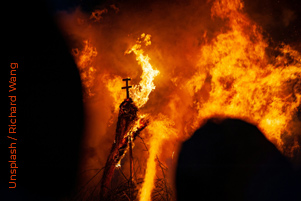
On September 1st, 2026, I read a Daily Mail report about a historic church on the Acadian Peninsula in New Brunswick that burned to the ground in what authorities believe was an intentional act of arson.1 The incident prompted Canada’s Conservative Party leader, Pierre Poilievre, to warn of a possible rise in anti-Christian behaviour. Mr. Poilievre stated: “One hundred churches have been burned [in Canada]. Christians may be the number one group that are victims of hate-based violence. But, of course, it’s not politically correct to say that.”
Many Christians in the country have expressed concern that religious freedoms appear to be facing increasing pressure amid anti-Christian attitudes, shifting cultural expectations and contested political debates over the role of faith in public life. However, when assessing reports of church burnings and vandalism in Canada, it is important to distinguish between confirmed arsons and the broader category of attacks on places of worship. Precision matters because the way these incidents are described shapes how Christians, religious freedom organizations, political leaders and the wider public understand their seriousness. Consider the following:
- Claims that 100 churches have been burned in Canada may overstate the number of confirmed church burnings, depending on how incidents are defined and counted.
- Between 2021 and 2023, 33 churches were reportedly burned to the ground.
- Since 2023, additional churches have been damaged by fire, while vandalism and other acts of desecration appear to have become more common.
- Taken together, these incidents may exceed 100 acts of aggression directed against Christian places of worship.
This clarification does not diminish Mr. Poilievre’s statement. Rather, it gives context to the discussion. Confirmed church burnings should be counted carefully, while the wider pattern of vandalism, desecration and hostility toward Christian places of worship should likewise be taken seriously.
Mr. Poilievre’s claim that “Christians may be the number one group that are victims of hate-based violence” may find support from a global perspective. Many religious freedom researchers identify Christians as among the most persecuted religious groups in the world, though figures vary depending on definitions and methodology. The Canadian context, however, requires a more careful assessment.
A recent National Post report notes that 71 percent of religion-motivated hate crimes in Canada targeted the Jewish community. Journalist Mason Kossak writes:
“Hate crimes motivated by religion fell 18 percent to 1,115 incidents. Of those, 788 targeted Jewish people, down 16 percent from the year before, but still 71 percent of all religion-motivated incidents. Muslims were targeted in 204 incidents, Catholics in 36 and other religions in 71. In 16 cases, the religion was not specified.”2
I raise these distinctions to emphasize that careful, accurate accounting does not weaken concern about attacks on churches. On the contrary, it strengthens our ability to examine the data responsibly and consider whether a clearer understanding of motive can emerge.
VOMC’s leadership team has not hesitated to acknowledge that Christians in Canada can and will face persecution. Our website states:
“Understanding persecution in a Biblical sense helps to include the Western Christian's experience in what it means to follow Jesus. Understanding persecution as only including violent acts often leads us to conclude that Western Christians are never persecuted. Understanding persecution to include a wider spectrum of hostility makes it obvious that even Western Christians can and will experience persecution if they faithfully follow Christ, even if it is of a milder degree. The Biblical passages on persecution then can become more meaningful for us, and we can properly apply them to our present situation.”3
In our Canadian context, how can we evaluate these incidents with honesty, humility and discernment? VOMC believes that determining motive and examining the broader climate of religious tolerance are essential elements of such an evaluation.
One helpful way to distinguish persecution from other forms of hostility is to ask whether a person or group would likely be treated differently if they held a different religious view or conformed to the dominant beliefs of the surrounding culture. If the answer is “yes,” the situation may reasonably be understood as persecution. If the answer is “no,” and the suffering would likely occur regardless of religious belief, it may be more accurate to describe the incident as a form of general hostility or social conflict rather than religious persecution.
With this framework in mind, how should we assess the violence directed against churches in Canada over the past five years? First, determining whether persecution is present becomes more complex when overlapping factors are involved. Ethnicity, race, political power and social alliances can all obscure the underlying motive. For this reason, reports of persecution should be as specific and evidence-based as possible. The more accurate the data, the better equipped we are to identify patterns and assess likely causes.
Second, persecution-related incidents should be considered within the cultural and social environment in which they occur. Culture shapes beliefs, customs, traditions, values, attitudes, history and heritage, while social conditions such as education, economics, status, government and politics influence how religious communities are perceived and treated. Together, these factors form a broader landscape that can either foster religious tolerance and respect or contribute to increasing hostility, polarization and social division.
In conclusion, incidents involving the burning, vandalism and desecration of churches in Canada should neither be minimized nor exaggerated. A faithful and sensible response requires both moral clarity and factual accuracy. Christians must speak openly when hostility toward the church occurs, while also recognizing that public credibility depends on careful language, reliable data and a willingness to distinguish persecution from broader social conflict. In a country that constitutionally protects freedom of conscience and religion, any pattern of aggression against places of worship deserves serious attention from Christian leaders, policymakers, law enforcement officials and the wider public.

Floyd A. Brobbel
Chief Executive Officer
Voice of the Martyrs Canada Inc.
Endnotes:
1 DailyMail.com/news/article-16094025/Canada-church-burned-arson-anti-Christian-violence.html
2 NationalPost.com/news/canada/jews-targeted-religious-hate-crimes
3 VOMCanada.com/aboutvomc.htm